Build an industrial empire across vast procedurally generated maps. Create production chains, develop cities, research technologies, build powerful brands, and compete for market dominance in a dynamic economy shaped by supply and demand.
Build Complete Production Chains
Control the entire journey of a product—from raw material to store shelf.
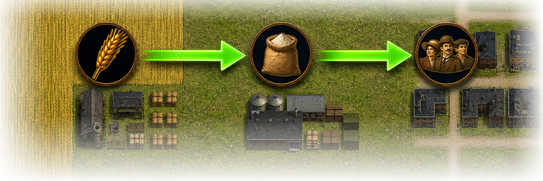
Establish farms, mines, logging camps, factories, warehouses, and shops. Supply each facility with the resources it needs, balance production capacity across multiple stages, and create efficient logistics networks capable of serving entire regions.
Turn wheat into flour and bread, iron ore into steel and machinery, cotton into fabric and clothing, or crude oil into fuel and advanced industrial products. Expand simple workshops into interconnected industries as the world becomes more technologically developed.
A shortage at one stage can disrupt the entire chain, while excess production may fill warehouses and drive prices down. Successful growth requires more than building factories: every part of the system must work together.
Produce the Goods That Defined an Era
Manufacture products inspired by the real industrial history of the early and mid-20th century—from canned food, corn flakes, bottled milk, clothing, and household goods to typewriters, radios, appliances, steam-powered vehicles, and classic automobiles.

Watch familiar products emerge as technologies transform industry and everyday life. Follow their evolution through new materials, manufacturing methods, and technological generations.
Every product includes a historical note explaining its origins, development, production, and influence on society. Discover the stories behind familiar goods, learn about forgotten inventions, and see how once-revolutionary products became ordinary parts of everyday life.
The game uses historically recognizable product categories and original fictional brands, allowing you to create your own industrial history without simply repeating the real one.
Compete in a Living Economy
Markets respond dynamically to supply and demand.

Flooding a region with one product may reduce its price and profitability, while shortages can create valuable opportunities. Population, income, access to goods, regional resources, production costs, and the actions of competing companies all influence demand.

Set prices, control costs, secure access to valuable resources, and decide when to increase production or enter a different industry. Compete for customers, suppliers, market share, and the most promising regions.
A profitable product will not remain uncontested forever. Rival companies can expand into your markets, introduce alternatives, and research technologies of their own. Adapt to changing conditions—or watch a once-dominant industry fall behind.
Shape the Growth of Cities
Cities are active participants in the economy, not static decorations.
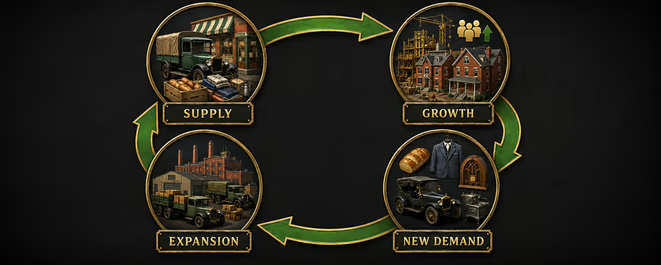
They need jobs, raw materials, consumer goods, and functioning industries to develop. A new factory can attract workers and support local businesses. Reliable access to products can improve living conditions and encourage further population growth. In turn, larger cities create new demand and provide a greater workforce.
Your decisions can transform a small settlement into a thriving industrial center. Poor planning, unemployment, shortages, or an overreliance on a single industry may slow its development.
Choose where to establish production centers, which cities to supply, and how each region should specialize. As your company grows, the world grows with it.
Shape Technological Progress
Research does more than unlock upgrades—it determines which technologies and products can exist in the world.
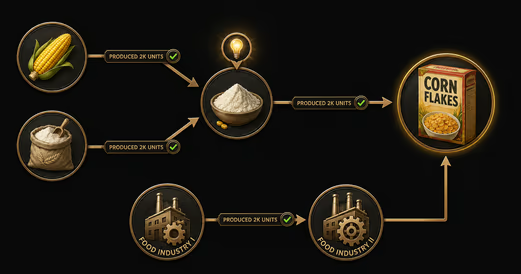
Develop new production methods, materials, engines, machines, and consumer goods. Become the first company to make a breakthrough, establish an entirely new industry, and gain a powerful advantage before competitors catch up.
Depending on the selected difficulty and game rules, technological progress may not be guaranteed. On more accessible settings, inventions can gradually enter the world on their own. Under more demanding rules, companies must discover them through research.
If nobody develops the internal combustion engine, gasoline-powered automobiles may never appear—and the world could continue relying on steam-powered transport. Familiar products might arrive decades later than they did in reality, emerge in a different form, or never be invented at all.
Every campaign can create its own alternative history of industrial progress.
Build Recognizable Brands
A product is more than the materials used to make it.
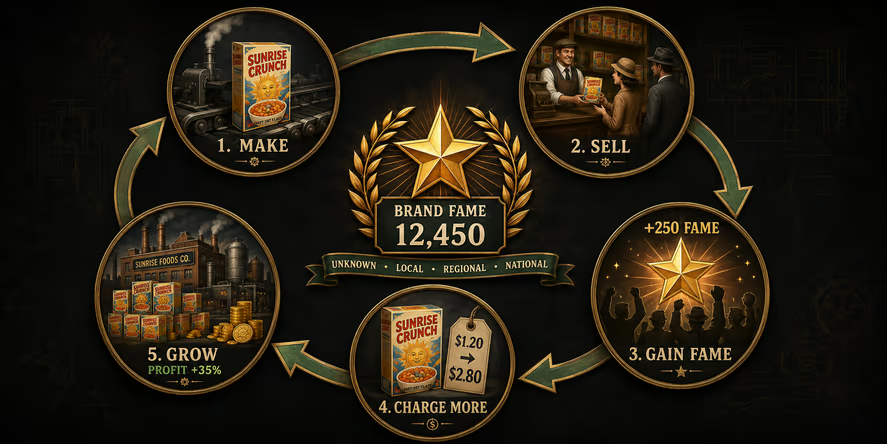
Create your own brands, improve product quality, and increase public awareness. Introduce distinctive product variants that stand apart from competing offers and turn ordinary goods into names recognized across the world.
A strong reputation can increase demand, inspire customer loyalty, and help your company defend its position even when competitors offer lower prices. Become known for affordable essentials, premium goods, technological innovation, or unique products that no other company can manufacture.
Build a brand that survives changing markets—and make your products symbols of their era.
Explore Vast Generated Worlds
Expand across vast procedurally generated maps with different geography, resources, cities, and economic opportunities in every campaign.
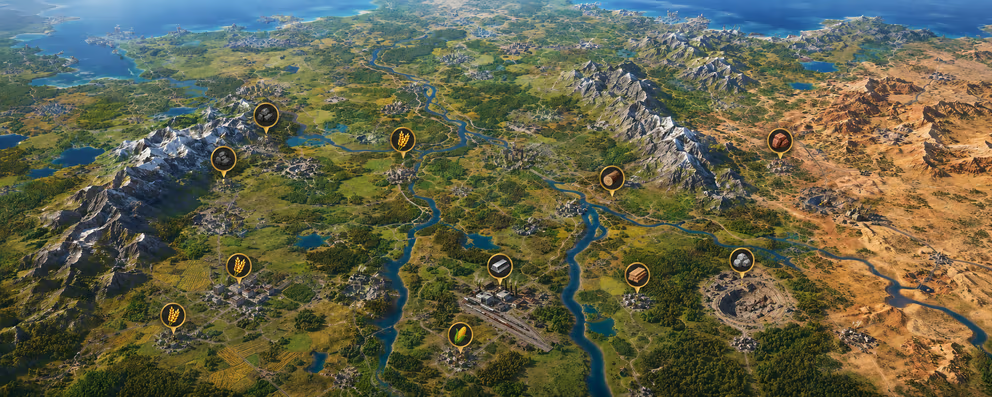
Some regions may provide abundant farmland but lack valuable minerals. Others can become industrial centers due to rich deposits, access to transport, or proximity to growing cities. Establish specialized regional economies and connect them through an increasingly complex production and distribution network.
Different starting conditions, difficulty levels, competitors, resources, markets, and paths of technological development make every world unique.
Key Features
Vast procedurally generated maps
Resource extraction, manufacturing, logistics, and retail
Complex multi-stage production chains
Historically inspired goods from the early and mid-20th century
Historical notes for every product
Dynamic prices driven by supply and demand
Competing companies and battles for market share
Cities that grow through jobs, industry, and access to goods
Research that shapes the technological progress of the entire world
Alternative industrial histories created by players and competitors
Product quality, unique goods, and brand recognition
Warehouses, inventories, production capacity, and regional distribution
Multiple difficulty levels and customizable game rules
Different markets, resources, and development paths in every campaign
Build industries. Create markets. Develop cities. Shape the future.

 Official site
 On Steam
 Details