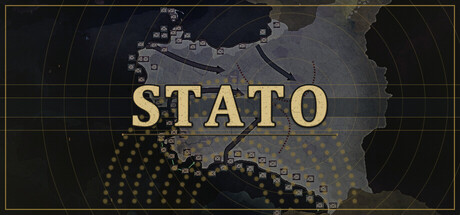
Shape a nation in a procedural grand strategy sandbox where geography, industry, diplomacy, and war drive emergent history. Build your state, secure resources, manage instability, and survive a world of rival powers.
Start from the historical world of 1934, generate an entirely new world, or reshape the map yourself. Create nations, redraw borders, move capitals and alter provinces, then take control of any country and let the simulation run.
Its population needs work and goods. Its industries need energy and resources. Its government needs money. Its armies need manpower, equipment and supply. Other nations pursue their own interests, react to threats and opportunities, form alliances and fight wars of their own.
There is no predetermined story. The systems of STATO create one.
Create Your World
The map is part of the sandbox.
Play with the historical borders and strategic situation of World 1934, generate a procedural world filled with original nations, or customize the political landscape before beginning your campaign.
Redraw borders, create and customize countries, choose capitals and modify provincial conditions. Then press play and watch your new international order develop under the same political, economic and military simulation as any other campaign.
A tiny state can become an industrial power. An empire can collapse under its own weight. New alliances can overturn the balance of power. A border drawn in the editor can become the cause of a war decades later.
Govern the State
A country is more than its borders.
Shape its laws, institutions and political priorities. Manage political power, stability and the competing interests placed on government.
Reforms can transform a country, but change takes time. Political decisions affect the economy, society, diplomacy and your ability to prepare for war.
Build an Economy That Can Sustain Your Ambitions
National power ultimately depends on what your country can support.
Manage taxation, expenditure, treasury reserves and sovereign debt. Develop provinces, expand infrastructure and electrical generation, secure strategic resources and build an industrial base capable of supporting both civilian life and military expansion.
Industry depends on real inputs. Energy shortages reduce productivity. Resources feed industrial production. Consumer demand affects the civilian economy. Trade connects countries and allows local disruptions to spread beyond their borders.
Economic growth is not simply a factory count. Population, infrastructure, resources, energy, market access and industrial capacity combine to determine what your country can actually produce.
Compete for Resources and Markets
Iron, coal, oil, rubber, grain and other strategic resources connect domestic development to international politics.
Import what you lack, export what you control and build industries that transform raw resources into greater economic and strategic value.
Global prices respond to supply and demand. Wars, blockades, industrial expansion and disrupted production can alter markets far beyond the countries directly involved.
A resource shortage can become an economic crisis. A trade relationship can become a strategic dependency.
Turn Industry Into Military Power
Design equipment, research technologies, organize divisions and assign factories to armament programmes.
Military strength must actually be produced.
More sophisticated armies require larger industrial and logistical systems to sustain them. Equipment must be manufactured, manpower mobilized and losses replaced.
The army you can deploy tomorrow depends on the economy you build today.
Conduct Diplomacy in a Changing World
Every country evaluates the world through its own interests, relationships, threats, ideology, geography and relative power.
Improve relations, negotiate military access, sign non-aggression agreements, create alliances, guarantee other countries, manage subjects or pursue territorial ambitions.
Your actions change how other governments perceive you. Aggression creates infamy. Growing military power creates fear. Wars can draw alliances into conflicts that neither side originally intended.
And while you make your plans, every other country is making its own.
Plan Wars Across Thousands of Provinces
Organize armies, establish frontlines and draw operational plans across a detailed province-based world.
Terrain, organization, equipment, planning, entrenchment and attacks from multiple directions influence combat. Infrastructure, supply networks and ports determine where armies can operate and how long offensives can continue.
At sea, construct fleets, protect trade, raid convoys, blockade hostile territory and support invasions.
Winning the battle is only part of winning the war.
Occupy, Integrate or Exploit
Conquered territory does not instantly become productive national land.
Occupation, compliance, resistance, integration and economic damage determine what you can actually extract from your victories.
Subjects can rebel. Civil wars can divide countries. Independence movements can create new states. Empires can fragment long after their greatest military victories.
The political map remains mutable throughout the campaign.
Watch History Emerge
STATO does not require the world to follow a predetermined script.
Economies grow and contract. Governments change. Nations form alliances, declare wars and pursue their own ambitions. Countries can collapse, divide or emerge from territory that once belonged to someone else.
Events and dispatches record what happens as the simulation creates a political history unique to that campaign.
Sometimes you will cause it.
Sometimes you will simply watch it happen.
Key Features
Create nations and redraw the political map
Historical World 1934 scenario with 26.000 provinces
Procedurally generated worlds and original nations
Detailed province-based simulation
Dynamic population and economic development
Laws, institutions, political power and stability
Taxation, public spending, treasury reserves and sovereign debt
Consumer goods, energy and resource-dependent industry
Dynamic international trade and resource markets
Research, equipment design and military production
Division design, frontlines and battle plans
Infrastructure and logistics-driven warfare
Naval construction, fleets, convoys, blockades and invasions
Diplomacy driven by interests, threats and relative power
Alliances, guarantees, subjects and territorial demands
Occupation, resistance, integration and independence
Scenario customization, saved campaigns and mod support
Create the world. Govern the state. Live with the consequences.

 Official site
 On Steam
 Details