Total War: ROME II - Desert Kingdoms Culture Pack Steam Charts, Sales, Players & Wishlists
Total War: ROME II - Desert Kingdoms Culture Pack is tagged as Simulation, Strategy. It is published by CREATIVE ASSEMBLY, Feral Interactive (developer) and SEGA, Feral Interactive (publisher) and released on 8 Mar, 2018. PureGameStats tracks Total War: ROME II - Desert Kingdoms Culture Pack's Steam wishlist rank, estimated wishlists, follower growth and launch momentum ahead of release. PureGameStats estimates 8,940 Steam units sold. Steam reviews are 73% positive across 298 responses. Platforms: Mac, Windows. ☆Sign in to track this game
Games›Total War: ROME II - Desert Kingdoms Culture Pack
Total War: ROME II - Desert Kingdoms Culture Pack Steam Charts, Sales, Players & Wishlists
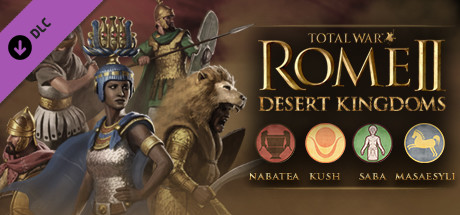
The Desert Kingdoms Culture Pack introduces four new playable factions to Total War: ROME II. The Kingdoms of Kush, Saba and Nabatea fall under the African/Arabian subculture, while the Masaesyli are of Numidian origin. These factions are native to the deserts of Africa and Arabia.
Steam sale
|
Steam Next Fest
|
Themed week
|▲Demo released|●Notable news
Daily wishlist gains and follower count captured for this game. Useful for spotting hype spikes tied to trailers, Steam Next Fest, or sale events.
Total War: ROME II - Desert Kingdoms Culture Pack Steam Reviews
Total reviews 298Positive 217Negative 81Positive % 72.8%Rating Mostly Positive
Player Reviews by Day
No daily review activity in this range.
Review Cloud
Terms split by whether reviewers use them more in
positive or critical contexts, relative to this game's
own review baseline. Size = how often the term appears.
Italicised terms are two-word phrases that
usually explain the context (like "buggy launch" or
"beautiful city"). Hover a term for the raw counts.
Based on recent English reviews.
How to read this: each row splits mentions of a topic
into praise (green, extends right) and criticism (red,
extends left). Mentions come from reviews that
recommended the game and reviews that did not, so a
topic with a longer green bar than red bar is one
recommending reviewers talk about more than critics
do. White ticks mark where the bars would end for
a typical game in this genre - if a bar overshoots its
tick, this game is above the genre norm on that
side.
Praise and criticism mentions per topic, split by whether
the reviewer recommended the game overall.
Based on 171 recent English reviews
(ingested 12 Oct 2026).
Ticks mark the typical silhouette
for a Simulation game - overshoot = above the genre norm on that side.
Topic
Criticism ← mentions → Praise
Mentions
Performance
Not enough mentions
-
Gameplay
18
21
Story
11
12
Graphics
13
Audio
7
Controls
Not enough mentions
-
Bugs
20
26
Value
56
137
193
Multiplayer
6
Replay value
8
PC System Requirements
Minimum and recommended hardware needed to run Total War: ROME II - Desert Kingdoms Culture Pack.
Microsoft no longer supports Windows 10 or older versions
Can you run it?
Can your rig run this game. Run a check now. Powered by WhatCanIRun.com.
Frequently Asked Questions
Find quick answers about release date, pricing, platforms and more.
View FAQsHide FAQs→
How many copies has Total War: ROME II - Desert Kingdoms Culture Pack sold on Steam?
PureGameStats estimates Total War: ROME II - Desert Kingdoms Culture Pack has sold approximately 8,940 copies on Steam, with low confidence. The estimate is derived from Steam reviews, concurrent player peaks and achievement completion rates.
How is Total War: ROME II - Desert Kingdoms Culture Pack rated on Steam?
Total War: ROME II - Desert Kingdoms Culture Pack has 298 Steam reviews with a 72.8% positive rating (Mostly Positive).
What is the current price of Total War: ROME II - Desert Kingdoms Culture Pack?
Total War: ROME II - Desert Kingdoms Culture Pack is priced at $8.99 on Steam. Full price history and best deals are tracked on this page.
When was Total War: ROME II - Desert Kingdoms Culture Pack released?
Total War: ROME II - Desert Kingdoms Culture Pack was released on 8 Mar, 2018. It was developed by CREATIVE ASSEMBLY, Feral Interactive.
Coverage & Updates
Latest from the official channels and across the games media.
About Total War: ROME II - Desert Kingdoms Culture Pack
The Desert Kingdoms Culture Pack introduces four new playable factions to Total War: ROME II. The Kingdoms of Kush, Saba and Nabatea fall under the African/Arabian subculture, while the Masaesyli are of Numidian origin. These factions are native to the deserts of Africa and Arabia.
More Total War: ROME II - Desert Kingdoms Culture Pack Details
The Desert Kingdoms Culture Pack introduces four new playable factions to Total War: ROME II. The Kingdoms of Kush, Saba and Nabatea fall under the African/Arabian subculture, while the Masaesyli are of Numidian origin.
These factions are native to the deserts of Africa and Arabia. Surviving these harsh environmental conditions has forged them into hardy warriors who use the shifting desert sands to their advantage in battle.
While culturally similar, each faction boasts unique new unit rosters which offer different military strengths. Each faction also has new building chains and technology trees, playing to their strengths and further differentiating their playstyles.
Alongside their individual Faction Traits, the Desert Kingdoms all share the following Cultural Traits:
Desert Warriors: +10% morale for all units during battles in the desert Deep-rooted Traditions: Penalty to research rate
Meroe (The Kingdom of Kush)
A major regional power with vast resources derived from its trade in gold, jewels and exotic hides, Kush has been overshadowed by its more powerful and famous northern neighbour, Egypt.
In the early 3rd century BC, king Ergamenes decided to wrest power away from the priests of Amun, and moved the capital from Napata to Meroe. The priests would no longer decide the fate of the kings and queens.
The shift of capital also marked something of a break from Egyptian culture with Hellenistic, Indian, Persian and African influences making their way through the trade routes. The kings and warrior queens would sit on the throne and rule with authority and conviction to protect the riches of Nubia. Even the Romans could not conquer Meroe, and preferred to trade instead.
A regional powerhouse with a surfeit of natural treasures and fertile land, Kush is well equipped to prosper and once again vie for power against the mightiest empires in the world.
Key Features:
Affinity for Egyptian/Hellenistic culture
Higher probability of female characters in politics
Trading kingdom (ivory, exotic hides, iron, gold)
Faction Traits:
Disciplined Workforce: Bonus income from slaves, reduction in slave decline, Reduced Public Order penalty from slaves.
The Land of the Bow: cheaper, better archer units.
The Nabataeans were great builders and pioneers of advanced construction techniques. They were the first civilization to use cement extensively, and built remarkable watertight reservoirs, ensuring a plentiful supply of potable water. Even when under threat from powerful foes like the Seleucids and Judeans, their progressive society enabled them to flourish and prosper.
The Nabataeans were very literate and had a remarkable degree of gender equality for an ancient civilization, with women participating in both political and religious matters. Nabatae was an important crossroad for the spice trade, serving as a conduit between the southern kingdoms that produced frankincense and myrrh, and the wealthy eastern and western empires who were its primary buyers.
Preserving all this wealth at such a geographically strategic location demanded a well-trained military and a strong navy. Nabatae had both, bolstered by excellent engineering and exploitation of the surrounding environment, making their capital city of Petra a nigh-impregnable bastion.
Key Features:
Hellenic influence: may recruit Hellenic-themed units for battle
Silk road traders: Bonus to trade and diplomacy
Skilled masons: bonuses to construction and fortification
Friends of Rome: diplomatic bonus with Roman factions/allies
Roman tactics: some native units may use Roman army formations/abilities
Faction Traits:
Stonecutters: Faster, cheaper construction of main settlement-chain buildings
The Sabaean kingdom lies in the harsh lands of the southern Arabian Peninsula. Even in such inhospitable conditions, however, these ingenious people thrived. They built dams, invented new irrigation techniques and became masters of water-efficiency. The Sabaeans were also excellent sailors, and had strong trade relations with peoples across the Red Sea.
Not warlike by nature, the Sabaeans charged mercenaries with the protection of their trade routes and caravans. That said, they were a resilient people of tough character, who made formidable foes for anyone who dared threaten their great capital city of Marib. Even the Romans could not best them during their expedition in the early 1st century.
Key features:
Camels as predominant cavalry, with superior armored camels
Excellent use of javelins and chariots
Agricultural and fertility bonuses from the famous Marib Dam
Incense production provides diplomatic and trade bonuses
Great Dam of Ma’rib: A unique building type which provides faction wide bonuses to agriculture and fertility and can be upgraded with technologies, but requires upkeep to maintain.
Faction Traits:
Incense Traders: Bonus income from tariffs
Hired Armies: Access to cheaper, stronger mercenary units
Saba Unit Roster:
Melee Infantry:
T1: Desert Levy T2: Mercenary Maas Gat Marauders T2: Sabaean Swordsmen T3: Noble Swordsmen
Prior to Numidia’s founding after the 2nd Punic war, its people were divided into two Berber tribes: the Massyli and the Masaesyli. Both were skilled warriors and there were many rivalries between them.
The Massyli had strong relations with Carthage, a key reason for the Massaesyli aligning with Rome when the opportunity came. Through many twists and turns, both tribes ultimately unified into theK kingdom of Numidia, under the Massylian king Massinissa. He ruled for an astonishing 54 years, transforming his kingdom into a prospering North African power.
Key Features:
Affinity to Cartage and Latin culture
Extensive Roman influence in battle
Cavalry-focused faction
Faction traits
Desert Ambushers: +50% chance of successfully launching an ambush

 Official site
 On Steam
 Details